
a swallow with an eagle's dream

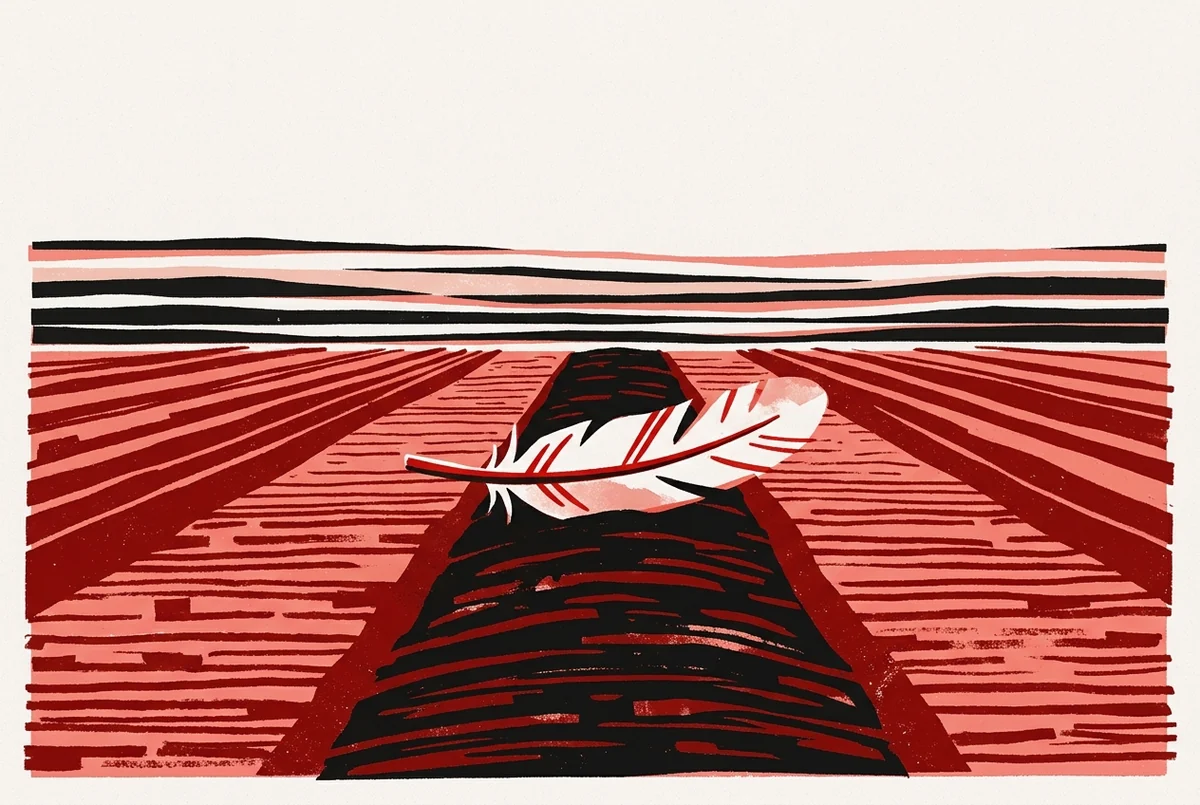
I have very big dreams, the kind most people would call unachievable. If I were a hired farmhand, I would be the one in the field telling the other labourers that one day we would all be rich and noble. They would laugh, because from where we stood, the road to that kind of wealth would look impossible.
More than two thousand years ago, a young man in China did exactly this. Sima Qian tells the story in his Records of the Grand Historian.
Chen Sheng was a hired ploughman. One day he stopped work, stood brooding on a ridge for a long while, and said to the men working with him: “If any of us becomes rich and noble, let us not forget one another.” They laughed at him. “You are a hired ploughman,” they said. “How could you ever be rich and noble?”
Chen Sheng sighed and replied: “How can swallows and sparrows know the aspirations of the swan?”
I first came across that line years ago in the old Chinese books I used to read, and it has stayed with me. Some of you may have seen me borrow it on social media, with an eagle in place of the swan: a swallow cannot fathom an eagle’s dream.
In English the line is often quoted with “ambitions” instead of “aspirations”. I avoid that word for my own dreams. Somewhere along the way it became a dirty word. When people describe someone as “very ambitious”, they rarely mean it kindly; it lands closer to an insult.
The character in the original is 志 (zhì), which is nearer to aspiration or resolve: what a person’s heart is set on. That is what I mean when I talk about my dreams.
My dreams are driven by audacity: the audacity to believe that I can also be, that greatness is not reserved for a few, and that even if it were, I am one of the few. Chen Sheng said something similar later in life. Leading the first great revolt against the Qin dynasty in 209 BC, he asked his followers: “Are kings, lords, generals and ministers born of a special breed?”
When I first read the swallow line, I did not take it as an insult to the swallow. I read it as a statement about design. Swallows are built for low, agile flight. They dart along the eaves catching insects, and their bodies are optimised for immediate survival and seasonal comfort.
An eagle’s architecture is entirely different. It can ride violent thermals and endure thin air where there is little oxygen. It can seem to float in place while it scans miles of horizon. A swallow cannot dream of seeing what an eagle sees, because its body cannot take it there.
But I may be one swallow with an eagle’s mindset, and I know I will eventually find a way to terraform this swallow body to fit it.
When we say a swallow cannot fathom an eagle’s dream, the real friction is that we are asking the swallow to audit the eagle’s flight plan. We are asking people anchored to maintenance, incremental safety and short horizons to judge a long-range dream. They will see it as recklessness, delusion or unnecessary risk, because by the physics of their wingspan it can never be.
For me, that “delusion” is where the audacity to be more begins.
There is a part of Chen Sheng’s story that people rarely quote. He did rise, and he made himself a king. Then one of the men he used to plough with came to visit, and began telling everyone at court about the king’s humble past. Chen had him executed.
His old companions quietly left after that. Sima Qian writes that even his generals stopped feeling close to him, and that this was why he failed. He was king for six months before his own charioteer killed him.
Sima Qian still gave him a place among the “hereditary houses”, a section of the history usually reserved for ruling families and nobles. The revolt Chen started went on to bring down the Qin after his death.
The first thing Chen said in that field was not the line about swallows. It was “let us not forget one another”. He kept the audacity and broke the promise.
That is the risk in seeing yourself as the swan: pushed far enough, it turns the people beside you into sparrows. When I picture myself in that field, I am not telling the others that I will be rich. I am telling them that we all will be.
So when I push my team, and I push them a lot, it is always “we”. Someone will look at a product and say: “But this was coded by Google. How can we code the same thing?” My answer is that Google did not build it to its current level on the first day either.
They started somewhere, and so will we. We will iterate, refine and get better, working deliberately towards a North Star, because that is where the future is.
We cannot fly to the highest horizon today, but we are not staying on this short one either. We are going to the next one. Our wings will get stronger and our wingspan will grow, and then we will go to the next horizon, and the next, and the next.
Our current swallow form is only where we begin.