
2026: the compass charter - navigating expansion, operating w/ precision
for those who followed The Keystone Charter, you know 2025 was about foundations. on may 29, 2025, my daughter was born. baby c arrived and every abstract thing I’d written about legacy and presence became immediate. when I hold her late at night while she fights sleep, when I watch her discover her hands, when she grabs my finger - nothing else seems to matter any more. she just needs me there and somehow i need here more.
the foundations held. The Keystone held. but this new architecture demands evolution.
2026 adds fatherhood, a constraint i’ve never navigated before: but it’s also the year i intend to bring some of my most ambitious ideas to life. which means, once again, something has to give. i can’t add 20+ more hours per week (to cover new ventures and likely going back to school) without subtracting from somewhere else. what’s on the chopping block is the thing that’s been both my strength and my ceiling: my operational involvement at work.
since 2017, i stepped into a form of leadership and i’ve been in every meeting, reviewing every deck, approving every decision. i called it “bringing excellence to the table.” really, it was control masking as care.
but even before being in leadership, i was always overextending myself. it was a good thing, i’ve written numerous times before about being a generalist and that help me. and it also made key people build trust in my and my proficiency. heck, i was even awarded “most resourceful rockstar” one time early in my career, and in the speech, the then finance manager of where i worked said, she could “come to me with anything” and i’d be able to solve it.
she was right and at the time, i cherished that award because it was the result of breaking my back and feeding myself with knowledge of everything and all things to be relevant all at once. and it grew with me across my career and became a compulsion to micro-manage.
i’‘ve spent the back half of 2025 building my team to function without my micro-managing self. it’s been uncomfortable. it’s also been necessary.
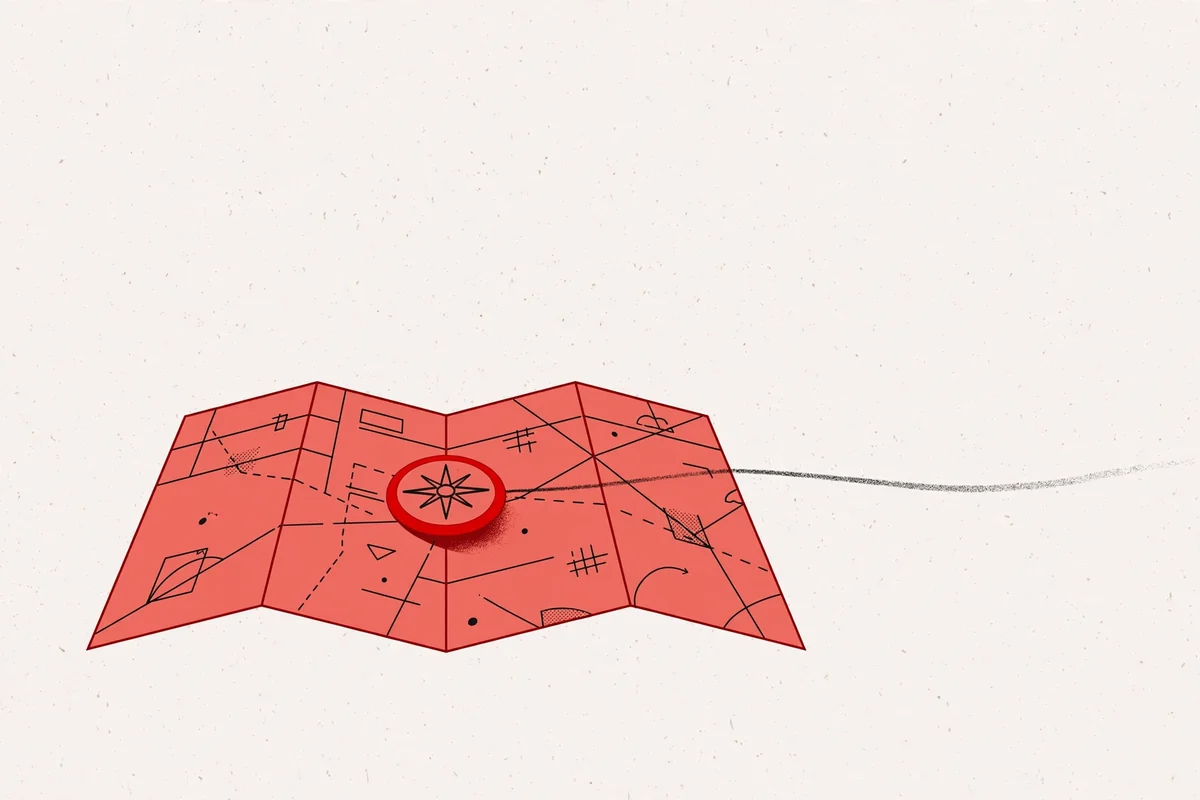
so this is The Compass Charter, because when you’re navigating fatherhood, school, and running a company simultaneously, knowing your true north isn’t optional.
the four cardinal directions
unlike the Keystone’s pillars that held things up, these directions orient you when terrain gets unfamiliar.
true north for me remain this: family
every decision filters through here first. If it pulls me away from this direction, it needs extraordinary justification.
Baby C doesn’t care about my work wins or law school grades. She cares that when she reaches for me, I’m actually present - not physically there while mentally drafting proposals. My wife has been patient with my ambition for three years now. But patience isn’t infinite and she shouldn’t have to compete with my potential when what she needs is my actual time.
Non-negotiable this year: family dinner five nights a week minimum. Mornings with Baby C before the day fractures into meetings and deadlines. Being home for bedtime more often than not.
This isn’t work-life balance rhetoric. It’s the coordinate system for everything else.
East: Strategic Leadership
This is where the sun rises on what we’re building. I’ve been builder-in-chief for too long. 2026 forces evolution: I’m shifting to architect. In strategy sessions and quarterly planning, yes. In daily operations and deck reviews, no.
Here’s what I’ve learned about teams after 13 years in leadership: smaller is almost always better. Faster decisions, fewer meetings, more fun. No need to chop up work to keep people politically happy. Higher bar for hiring means we can pay great people well and have no room for mediocrity. Complex problems are more soluble in IQ than they appear - many companies are 2-10x overstaffed and wonder why they move slowly.
My role this year is to ensure we have the right small teams, then trust them to own their domains completely. If someone can’t fully own their area, we make a change. No in-between.
South: Intellectual Expansion
Going back to school is a five-year bet on the 2030s. Understanding legal frameworks isn’t supplementary anymore - it’s central to building what I want to build.
But I’m also going back because I’ve noticed something uncomfortable: I’m way more confident about what I “know” than the evidence allows. We all are. We answer questions we know how to ask instead of figuring out which questions actually matter. We optimize familiar metrics while the important shifts happen in blind spots.
Law school specifically (though it might end up being accounting or political science - I’m still deciding) represents formal discipline in a space where I have no breadth. New frameworks I wouldn’t naturally reach for. Exposure to thinking that doesn’t come from building businesses.
The accountability is built in: my grades will show whether I’m actually engaging or just showing up. No hiding behind “good considering I’m also working full-time.”
West: Operating Principles
These aren’t aspirational. They’re how I’ve already learned to work, now made explicit:
Speed compounds. I learn more per unit time when I make contact with reality frequently. Going fast forces focus on what actually matters - there’s no time for bullshit. Slow is often just fear dressed as thoroughness. A week is 2% of the year.
Enthusiasm isn’t optional. It’s much easier to work on things that excite me. Energy is an input for progress, not a luxury. Sometimes big things are easier than small things because the enthusiasm justifies the effort.
Markets miss more than they catch. The efficient market hypothesis is, at best, a lossy heuristic. The best opportunities exist precisely where it fails. It’s often more accurate to model the world as 500 people making decisions than 8 billion people efficiently pricing everything. Most people are other people.
Ambition has fewer limits than we think. We’re constrained by invisible orthodoxy more than actual physics. As human beings, we have the right - maybe the moral duty - to reshape things to our preferences. Technology is really just applied knowledge. Focus on raising the ceiling, not lifting the floor.
Dopamine sources predict behavior. Better to get mine from improving ideas than from having them validated. It’s okay to get it from “making things happen.” That’s where I get mine.
Specific Commitments
Schedule architecture: School three days per week. Work three days per week. Family every day. The constraint forces clarity about what actually matters.
Physical baseline: I’ve developed a potbelly. I call it “DadBod” but I’m not proud of it. This is the year I finally commit to the gym - not for aesthetics but because I can’t navigate everything else while exhausted. Sleep, exercise, basic maintenance are infrastructure, not indulgence.
Strategic not operational: I’m in quarterly planning, strategy sessions, and key relationships. Out of daily operations, execution details, and every-meeting syndrome. The team I’ve built either steps up or I’ve hired wrong. This year will show which.
Law school with full commitment: If I’m doing this, I’m doing it right. Full attendance, actual engagement, grades that reflect effort. No “pretty good considering” excuses.
What 2025 Taught Me
The Keystone Charter promised authenticity and foundation. It delivered, but not how I planned.
I learned that building people requires patience while moving fast requires urgency - and somehow you need both. Baby C taught me that legacy isn’t what you leave behind, it’s what you live out in front of the people watching you.
I also learned my operational instincts were often right but my execution was wrong. Enthusiasm matters - but I was bringing it to too many things. Smaller teams are better - but I was still acting like I needed to be in every room. You can do more than you think - but only if you stop doing things that don’t matter.
2025 refined the principles. 2026 is about precision in execution.
The Invitation
The Keystone Charter invited you to consider your foundations. This one asks you to examine your operating system.
Most people aren’t blocked by lack of ambition. They’re blocked by bad principles that slow them down. Your context is different from mine, but the questions are universal:
Are you moving fast enough to make real contact with reality? Are you building teams that are too large with people who are just okay? Where are you getting your dopamine - from improving or from being validated? Are you raising the ceiling or trying to lift the floor? Are you doing more than you think you can, or accepting invisible limits?
Accountability
Last year I did monthly public reflections. This year is different. The accountability is built into the constraints: my law school results and professional results both need to show excellence. Not balance, not “good considering” - excellence on both fronts.
If I can’t lead strategically while excelling in law school, I’ve failed. If I sacrifice family presence for either, I’ve failed. If I’m still in every meeting by Q3, I’ve failed.
The compass either keeps you oriented or it doesn’t. There’s no middle ground.
Here’s to 2026 - a year of navigating expansion while operating with precision, one deliberate choice at a time.